
2026 Winter Olympics
2026 Winter Olympics: Dates, Sports, Venues and Key Highlights
The 2026 Winter Olympics, officially known as Milano Cortina 2026, brought together the world’s best winter sports athletes for an exciting international sporting event in Italy. From thrilling ice hockey matches to breathtaking skiing competitions, the Games showcased athletic talent, determination and national pride.
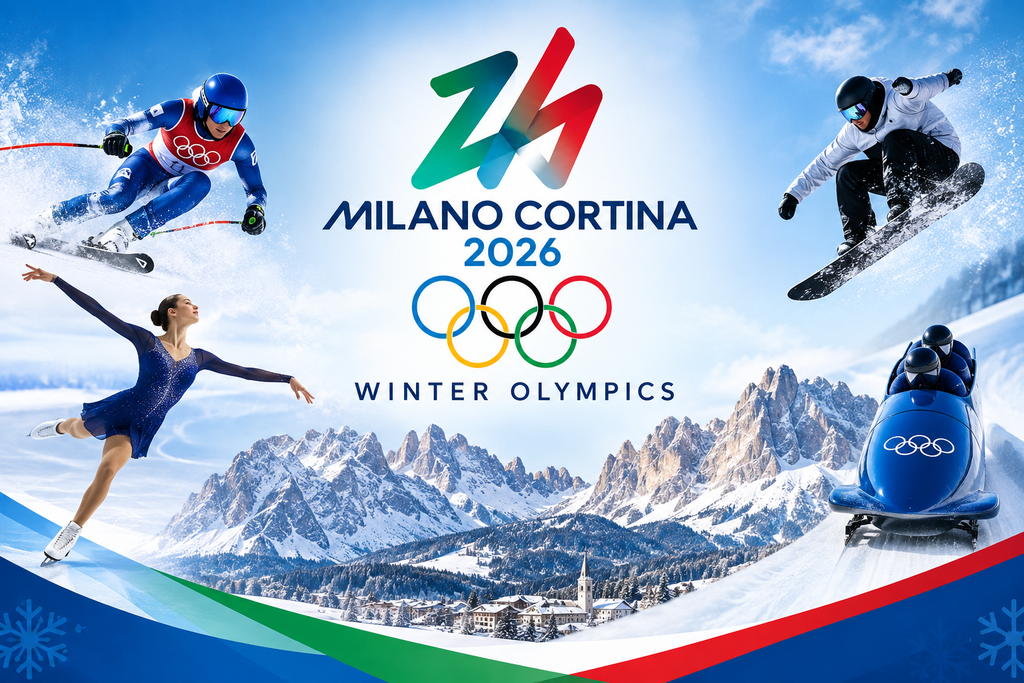
The event took place from 6 February to 22 February 2026, with competitions held across Milan, Cortina d’Ampezzo and other locations in northern Italy. The Games were particularly notable for their multi-location format, combining major city venues with established winter sports destinations in the Italian Alps.
For sports fans around the world, the 2026 Winter Olympics offered unforgettable performances, historic achievements and the introduction of a new Olympic sport.
When Were the 2026 Winter Olympics Held?
The Milano Cortina 2026 Winter Olympics officially ran from 6 February to 22 February 2026. The opening ceremony took place at San Siro Stadium in Milan, while the closing ceremony was held at the Verona Olympic Arena.
Here are the key facts about the event:
| Detail | Information |
|---|---|
| Official name | Milano Cortina 2026 |
| Host country | Italy |
| Start date | 6 February 2026 |
| Closing date | 22 February 2026 |
| Number of sports | 8 |
| Number of disciplines | 16 |
| Medal events | 116 |
| New Olympic sport | Ski mountaineering |
| Host locations | Milan, Cortina d’Ampezzo and other locations in northern Italy |
The Games brought together athletes from across the world to compete for Olympic medals and represent their countries on one of the biggest sporting stages.
Where Were the 2026 Winter Olympics Held?
Italy hosted the 2026 Winter Olympics across several cities and mountain regions. This approach allowed organisers to use existing sporting facilities and showcase some of the country’s most famous winter destinations.
The main locations included:
Milan: Milan hosted ice hockey, figure skating, speed skating and short track speed skating events. It also hosted the opening ceremony.
Cortina d’Ampezzo: This famous Alpine destination hosted women’s alpine skiing, curling, bobsleigh, luge and skeleton competitions.
Bormio: Bormio hosted men’s alpine skiing and ski mountaineering events.
Livigno: Livigno became a centre for freestyle skiing and snowboarding competitions.
Val di Fiemme: This region hosted cross-country skiing, ski jumping and Nordic combined events.
Anterselva: Anterselva hosted biathlon competitions, combining cross-country skiing with precision rifle shooting.
The closing ceremony took place at the Verona Olympic Arena, a historic venue that provided a memorable setting for the end of the Games.
Which Sports Were Included in the 2026 Winter Olympics?
The 2026 Winter Olympics featured eight sports divided into 16 disciplines, with 116 medal events. The programme included traditional winter sports alongside the debut of ski mountaineering.
1. Alpine Skiing
Alpine skiing was one of the major attractions of the Games. Athletes raced down steep mountain courses in events such as downhill, slalom, giant slalom and super-G.
Competitors needed speed, balance and precise technique to navigate challenging courses and achieve the fastest times.
2. Figure Skating
Figure skating combined athletic ability with artistic performance. Competitors performed jumps, spins and choreographed routines in individual, pairs, ice dance and team events.
The sport attracted viewers who enjoy a combination of technical difficulty, creativity and musical expression.
3. Ice Hockey
Ice hockey remained one of the most anticipated events of the Winter Olympics. National teams competed in fast-paced matches requiring teamwork, speed, tactical awareness and accurate shooting.
The competition brought excitement to fans and highlighted the importance of coordination and strategy in team sports.
4. Snowboarding and Freestyle Skiing
Snowboarding and freestyle skiing featured aerial tricks, jumps, halfpipes, rails and racing events. Athletes were judged on factors such as execution, difficulty, technique and overall performance, depending on the event.
These disciplines appealed to fans who enjoy high-energy action and creative athletic performances.
5. Cross-Country Skiing and Biathlon
Cross-country skiing tested athletes’ endurance over demanding distances and challenging terrain. Biathlon added another level of difficulty by requiring competitors to shoot accurately after periods of intense physical exertion.
Both sports rewarded stamina, discipline and the ability to maintain concentration under pressure.
6. Bobsleigh, Luge and Skeleton
These sliding sports involved athletes racing down specially designed icy tracks at high speeds.
Bobsleigh teams worked together to control their sleds, while luge and skeleton athletes relied on body positioning and precise steering techniques. Small differences in timing and control could significantly affect the final results.
7. Curling
Curling combined strategy, accuracy and teamwork. Players slid heavy stones across the ice towards a target while teammates swept the surface to influence the stones’ speed and direction.
The sport required careful planning, communication and tactical decision-making throughout each match.
8. Ski Jumping and Nordic Combined
Ski jumping tested athletes’ ability to achieve distance and maintain control during flight and landing.
Nordic combined brought together ski jumping and cross-country skiing, rewarding competitors who could combine technical ability with endurance.
Other disciplines included speed skating, short track speed skating and ski mountaineering.
Ski Mountaineering Made Its Olympic Debut
One of the biggest developments at the 2026 Winter Olympics was the introduction of ski mountaineering, commonly known as SkiMo.
Unlike traditional alpine skiing, ski mountaineering involves travelling uphill on skis, climbing certain sections on foot and descending challenging mountain routes.
The Olympic programme featured men’s and women’s sprint events and a mixed relay. Competitors needed endurance, climbing ability, efficient transitions and strong downhill technique.
The sport’s inclusion introduced a new challenge to the Olympic programme and expanded the range of winter sports available to viewers.
Which Country Won the Most Medals at the 2026 Winter Olympics?
Norway finished at the top of the overall medal table at Milano Cortina 2026. The United States placed second, while the Netherlands finished third by total medal count. Host nation Italy also enjoyed a successful campaign.
The leading five countries finished with the following medal totals:
| Rank | Country | Gold | Silver | Bronze | Total |
|---|---|---|---|---|---|
| 1 | Norway | 18 | 12 | 11 | 41 |
| 2 | United States | 12 | 12 | 9 | 33 |
| 3 | Netherlands | 10 | 7 | 3 | 20 |
| 4 | Italy | 10 | 6 | 14 | 30 |
| 5 | Germany | 8 | 10 | 8 | 26 |
Norway’s leading position reflected its long-standing strength in winter sports. Italy’s performance was also significant, as the host nation achieved a record total of 30 Winter Olympic medals.
Memorable Highlights from the 2026 Winter Olympics
The Games produced several historic achievements that attracted international attention.
- Brazil won its first Winter Olympic gold medal. Lucas Pinheiro Braathen won the men’s giant slalom in alpine skiing.
- Georgia earned its first Winter Olympic medal. Anastasiia Metelkina and Luka Berulava secured silver in figure skating pairs.
- Italy achieved a national record. The host country won 30 medals, including 10 gold medals.
- Women’s participation reached a new high. Women accounted for approximately 47% of participating athletes, with 50 women’s medal events on the programme.
- Ski mountaineering entered Olympic history. The sport made its debut with sprint and mixed relay competitions.
These achievements made Milano Cortina 2026 a significant edition of the Winter Olympic Games, creating new milestones for athletes and their countries.
Why Were the 2026 Winter Olympics Important for Italy?
Hosting the Winter Olympics gave Italy an opportunity to showcase its sporting traditions, cultural heritage and mountain destinations to a worldwide audience.
Milan provided an international urban setting, while Cortina d’Ampezzo and the surrounding Alpine regions offered spectacular scenery and established winter sports facilities. Other venues, including Bormio, Livigno and Val di Fiemme, highlighted Italy’s experience in hosting winter sporting competitions.
The multi-location format also demonstrated how major sporting events can use facilities spread across several regions rather than relying on a single host city.
For local communities, the Games offered opportunities to attract visitors and promote tourism. However, the long-term benefits depend on factors such as infrastructure costs, environmental protection, transport planning and the continued use of sporting venues after the event.
Frequently Asked Questions About the 2026 Winter Olympics
1. When did the 2026 Winter Olympics start and end?
The 2026 Winter Olympics started on 6 February and concluded on 22 February 2026. Both the opening and closing ceremonies took place in Italy.
2. Where were the 2026 Winter Olympics held?
The Games were held in northern Italy, with Milan and Cortina d’Ampezzo as the two officially named co-host cities. Competitions also took place in locations including Bormio, Livigno, Val di Fiemme and Anterselva.
3. How many sports were included in the 2026 Winter Olympics?
The programme included eight sports, 16 disciplines and 116 medal events.
4. Which country won the most medals at the 2026 Winter Olympics?
Norway finished first with 41 medals, including 18 gold, 12 silver and 11 bronze.
5. What new sport was introduced at the 2026 Winter Olympics?
Ski mountaineering made its Olympic debut, featuring men’s and women’s sprint competitions and a mixed relay.
6. When were the 2026 Winter Paralympics held?
The Milano Cortina 2026 Winter Paralympics took place from 6 March to 15 March 2026, following the Olympic Winter Games.
7. Why are the Winter Olympics held every four years?
The Winter Olympics are part of the Olympic Games cycle and are normally held every four years. This schedule gives athletes time to train, qualify and prepare for international competition.
Conclusion
The 2026 Winter Olympics in Italy brought together world-class athletes, exciting competitions and historic achievements across a wide range of winter sports.
From Norway’s leading medal performance to Italy’s record medal haul and the Olympic debut of ski mountaineering, Milano Cortina 2026 provided memorable moments for sports fans worldwide.
The Games also highlighted the importance of international cooperation, sporting innovation and sustainable planning. With its combination of mountain venues, modern arenas and historic locations, the event added an important chapter to the history of the Olympic Winter Games.
For anyone interested in international sports, Olympic results or winter competitions, Milano Cortina 2026 remains a major event to explore and remember.
SEO Publishing Checklist
- Focus keyword: 2026 Winter Olympics
- Secondary keywords: Milano Cortina 2026, 2026 Winter Olympics results, Winter Olympics medal table, 2026 Winter Olympics sports, Winter Olympics venues in Italy
- Suggested image alt text: Not required for this text-only version.
- Suggested category: Sports / Olympic Games
- Recommended schema: Article schema, including the headline, author, publication date and modification date.
